
Abiotic Stress in Agriculture
Abiotic stress refers to the negative impact of non-living environmental factors on crops. These stressors, including salinity, drought, and extreme temperatures, significantly reduce yield and quality. As global climatic events intensify, understanding abiotic stress and developing effective management strategies is crucial for ensuring sustainable and profitable yields for growers.
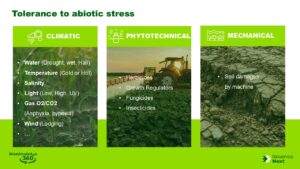
Trough Rovensa Next´s history, we have been researching and developing solutions against abiotic stress for more than 3 decades and, Biostimulation 360 strategy is the culmination of all the solutions researched and proven on the field. In the table below, you will discover which are the most impactul type of abiotic stresses followed by our solutions for mitigating them.
Want to know more about Abiotic Stress? Click here to read this related article.
Climatic Stress
Climatic Stress group is the most important and impactful group affecting our crops. These climatic events, such as water, temperature related can be the factor between having a profitable year or not.
Drought, cold and heat stress are the primary abiotic stress threat in agriculture.
Drought stress is probably the most severe abiotic stress affecting crop growth, productivity, and survival, and causes significant setbacks to agricultural productivity with increasing frequency.
For more info click here!
In field, a drought stress event is usually accompanied by heat, UV light stress, and will trigger a reduction or stoppage most of the metabolic processes, such as:
- Reduced transpiration and photosynthesis
- Reduced or stopped nutrient absorption
- Supress root and vegetative growth
- Flower or fruit abortion
- Early senescence
- Overproduction of Reactive Oxygen Species
Such impactful events, can be mitigated with our Biostimulation 360 strategy:
Mode of Action in Time

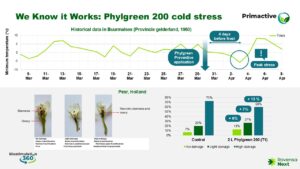
- Prepare your crops against stress with our Primactive effect. “Priming” refers to a plant’s ability to prevent stress before it happens and respond to stress after exposure. Primactive effect of Phylgreen, prime the plant before stress, setting up the mechanism of stress tolerance. With the application of Phylgreen, we trigger a response inside the plant to alterations in the crop’s metabolism, enabling it to better resist the effects of drought, late frost and heat stress. The mannitol, alginates, various polysaccharides, and polyphenol antioxidants found in Phylgreen help prepare the plant to self-manage the effects of stress, and for such, the application of Phylgreen must be done from 9 up to 2 days before the onset stress.
Want to know more about Primactive. Click here to read this related article.

- If we did not had the opportunity to apply Phylgreen, or the drought, cold and heat stress event is too long and grave, we recommend the application of our Curative solutions (Intake V,Delfan Plus, Vegenergy) which can help to sustain plant metabolism during stress and plant recovery after stress period, minimising energy demand by the plant. Rich in various L-α free amino acids, our Curative solutions, when applied foliar during or after stress events, Intake V, Vegenergy, Delfan Plus can help reinforce the crops’ own coping mechanisms to relieve the negative effects of abiotic stress by reducing the ROS, improving the Nitrogen conversion in to Amino Acids, giving a boost of energy to the crop among others.
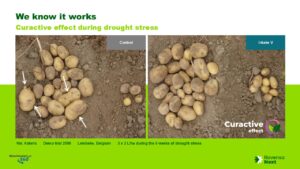
Want to know more about Curactive? Click here.
Mode of action in place:
- Transformer – By maximising the efficiency of soil water dynamics, Transformer is able to improve the water availability in our soils. This corrector enhances water retention in soil and improve soil – water interactions, bringing a higher water availability trough the capacity of reducing the water surface tension and penetration. This effect will increase both the efficiency of rainfall water as well as irrigation systems put in place.
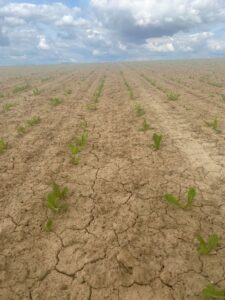
We know they work – Transformer improved the emergency of sugar beet in drought stress conditions in Belgium
- Humic Acids – Our Humic Acid Range has been specifically designed and developed to increase the root system of the plants. With the application of Humistar, our plants will have a increased fine root system, and thus have a higher capacity to absorb water and nutrients. In a drought stress moment, when the availability of water in the soil is scarce, an improved rooting system thanks to Humistar WG / Turboroot will make a significant difference. In stressful moments, the roots play another important role which is the energy / carbohydrates reserves. With Turboroot WG, by increasing the rooting system, we give our plants a higher reserve to overcome the stress period.
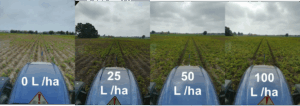
We know it works – Humistar WG emproved the emergence and development of potato during a high drought stress period
- The potassium brought by Final K / Armonika will play a crucial role during the drought stress period. Potassium the main nutrient involved in water management and transport inside the plant as well as stomata activity. As mentioned above, during drought and heat stress, the plant stops the transpiration and photosynthesis to minimise the water loss. But a complete stoppage will finally collapse the plant organism, and the applications of Final K / Armonika will help the plant to manage the reduction of transpiration without completely shutting down.
Salinity, Sodicity and Soil Reduced Fertility
Salinity is a stress that is more and more encountered. Water quality, increased fertilizer application, degradation of organic matter in our soils leads year by year to Salinity and Sodicity. This stress refers to the accumulation of soluble salts, such as sodium, chlorides, sulfates, and carbonates, in the soil, which can have serious consequences for plants. When soil salt levels are high, they hinder plants from absorbing water and nutrients, affecting their growth and development.
Want to learn more about this subject. Click here.
To mitigate the negative effects of Salinity and Sodicity, Biostimulation 360 bring again a strategy based on:
Mode of action in place:
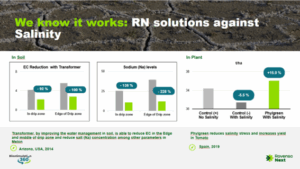
Transformer, as commented before is able to improve the soil – water interaction and will help to lixiviate the Sodium and reduce the EC.
Mode of action in plant:
As Salinity and sodicity is a continuous stress for the plant, the Phylgreen applications during the year will protect the plant 360 days thanks to the plant genetic expression, bringing a metabolic response in self managing the salinity.
Applications of Selective herbicides and Growth Regulators
In many broadacre crops, post emergence, our growers apply selective herbicides that target the weeds. Even if the herbicides have a selective mode of action, they partially create a phytotoxic stress inside the plants, reducing the production of photosynthesis, creation of certain amino acids, or affect some metabolic routes. After the application, the crops can be seen to have a period of a week of stopped or reduced growth with signs of phytotoxicity. Thanks to the Biostimulation 360, our growers can reduce the period of recovery, with the Curactive effect of Intake V, vegenergy and Delfan Plus and recover a part of yield lost in this period.
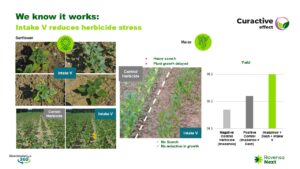
We know it works – Intake V recover a part lost yield in sunflower
Without a doubt, the impact of abiotic stress has increased substantially in recent years because of the ongoing climate breakdown. As Global Climate patterns continue to change, and human activities exert more pressure on the environment, understanding and mitigating negative abiotic stress effects in crops is becoming increasingly important to both producers and consumers, and Biostimulation 360 is the perfect tool, making Rovensa Next your partner in bringing a sustainable and profitable harvest.